
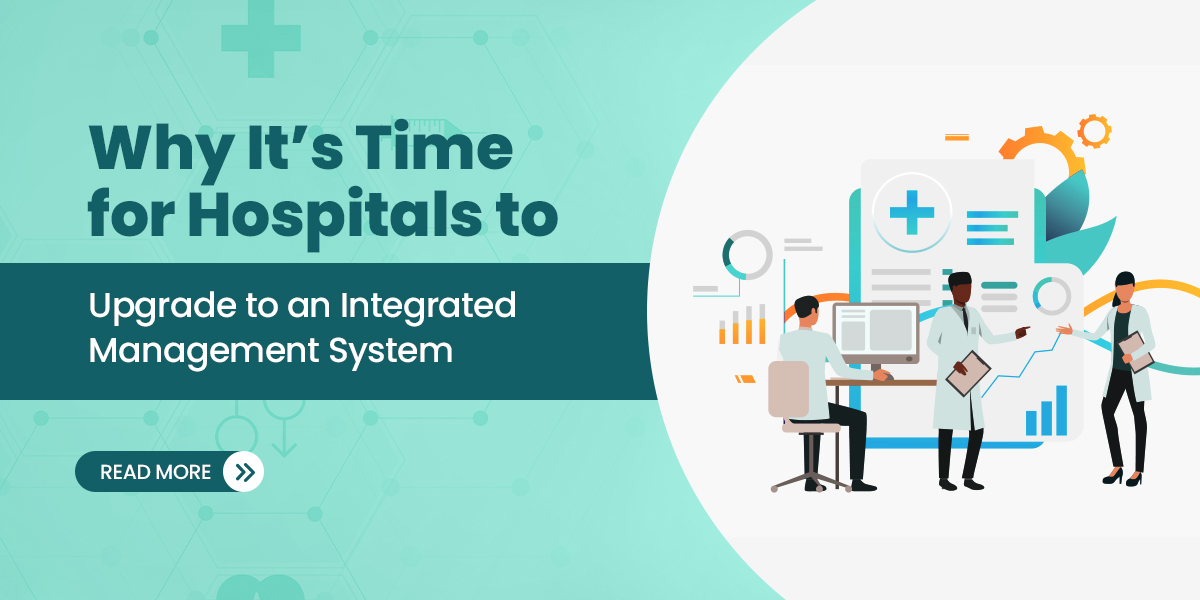

In the modern era, hospitals face a lot of pressure to deliver continuous care to patients while handling huge volumes of information, resources, and compliance. Possessing a traditional system will more likely result in operating outside, resulting in delays, errors, and rising costs. Integrated Management System (IMS) merges different functions into a single common platform to help hospitals improve efficiency, decision-making, and patient outcomes. Now we are going to discuss the reasons why hospital management software upgrade is becoming necessary.
Better Operational Performance
An integrated management system simplifies the activities within the hospital by integrating real-time administrative, clinical, and financial information. Hospitals can also schedule, bill, inventory, and record patient records on one dashboard instead of using several separate systems. Integrated Management System saves on redundancy, reduces mistakes and time wastage, and improves routine processes, enabling staff to concentrate on what is most important in providing better patient care.
How Does Integration Benefit Patient Care?
Poor interdepartmental coordination in most cases leads to delays for patients. An IMS provides instant access to reliable information among doctors, nurses, and the support staff. This means
- Faster diagnosis and treatment
- Fewer medical errors
- Better continuity of care
- Greater patient satisfaction
By incorporating patient records and converting them back into a more streamlined and personalized experience, hospitals can make the healthcare experience more personalized to the patient.
Financial Transparency and Control
Financial management in hospitals is not an easy task, but IMS helps provide transparency through observation of cost, revenue, and resource utilization in one place. Real-time financial information can be used to assist the administrators in making effective decisions about the budgeting, procurement, and allocation of resources. Integrated Management System is to guarantee that there is no leakage, that the rules and regulations are followed, and that the hospital remains viable and still provides quality services.
What Is the Rationale behind Data Security in Hospitals?
Health data is highly sensitive, and it can be easily compromised. An IMS enhances security by providing standardization of protocols to all departments. Hospital management software gets rid of the risks of paper records or fragmented systems. State-of-the-art encryption, user authentication, and frequent surveillance of patient information protect patient data and maintain client compliance with healthcare regulations, and so are by-products, not add-ons.
Streamlined Compliance Management
There are high standards of regulations that hospitals have to abide by, and failure to do so may lead to fines. An IMS makes compliance easier by automating reporting, standardizing documentation, and keeping audit records. This eliminates human error and wastage of time during the inspection process. One way that hospitals can reduce administrative overheads and still maintain compliance checks in their daily operations without affecting patient care in a manner that would be contrary to legal and ethical standards is by introducing compliance checks into the workflow of the hospitals.
Conclusion
The healthcare industry is evolving at a very rapid pace, and hospitals have to be smarter in such a way that they can keep up. An IMS will make the organization more efficient, protect sensitive data, and provide better care to patients at a lower price. It has become more of a necessity than an option because of its capacity to consolidate departments and ease compliance. Global Infocloud is a hospital software provider in Pune that provides the best ERP solutions, so those hospitals interested in finding such a reliable solution should not pass up the chance.