
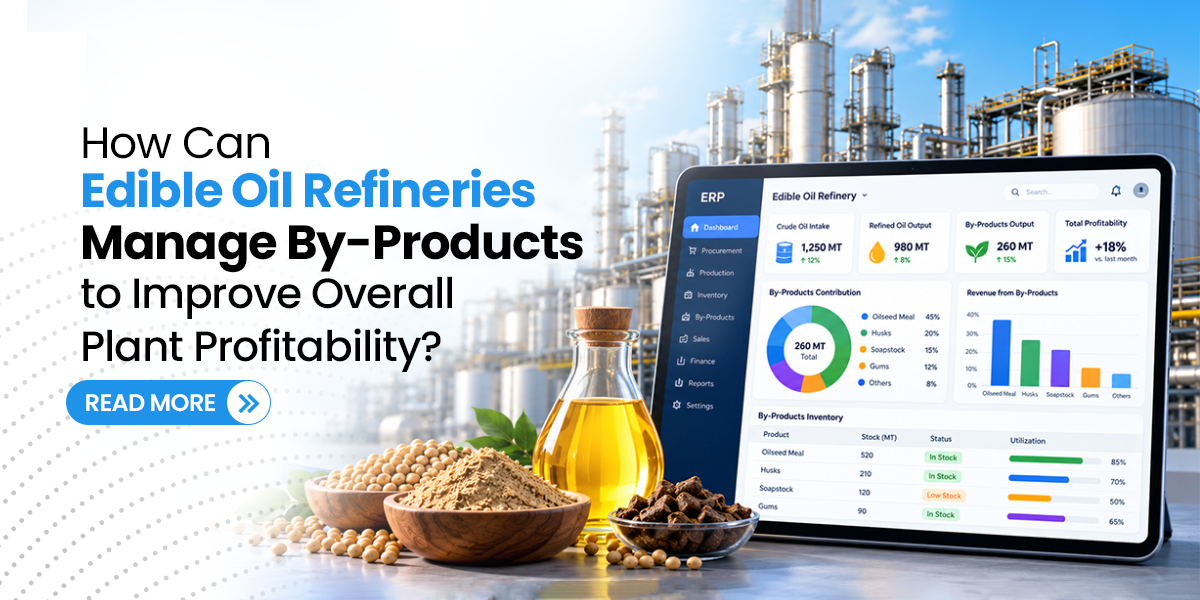

For better profits, every phase of edible oil refinery production can get value addition through ERP for Edible Oil Industry. Along with refined oil, there are also processing results in by-products such as fatty acid distillates and spent bleaching earth, to name a few. It is important to manage them well; otherwise, such materials can add to resource waste and disposal costs, along with affecting plant efficiency. If by-product management is done well, it reduces operating costs while improving overall performance.
Why Is By-Product Management Important in Edible Oil Refining?
By-products may be costs and business opportunities! They are valued based on the composition and quality of their material, its handling, and the possibility of using appropriate recovery or processing methods. To boost profitability, re-refinery operations can be carried out by implementing the following measures:
- Oil recovery
- Waste reduction
- Lower disposal costs
- Improved resource utilisation
- Additional revenue streams
- Better process efficiency
Early identification of valuable materials enables plants to decide which materials to recover, reuse, treat, or dispose of.
What More Can Be Done for Refineries to Maximise the Value of Their By-Products?
Materials from various stages of refining are produced that demand certain handling techniques. Operators can analyse each of these residues and determine if there are any recovery options.
- Recovering oil from appropriate soapstock will increase the use of materials and minimise waste.
- Depending on the composition of processing gums and market needs, some valuable phospholipids may be recovered.
- Testing of the fatty acid distillates can help identify potential for additional processing or to market them to appropriate industrial consumers.
- Caring for spent bleaching earth can minimise losses of oil and deal with storage and disposal risks.
The right method will depend on the oilseed to be processed, the method of refining, the desired product specifications, and local regulations.
How Does Process Optimisation Contribute to Profitability?
Process optimisation can, before they grow into costly loss streams, help lower losses from refineries. Operators can monitor all the refining stages and identify inefficiencies, store materials, and recover them. There is also better coordination between production, maintenance, and quality teams, which helps to ensure reliable operations. This will tie the daily running of the process to the bottom line. ERP software for Edible Oil Industry can support this process by helping businesses manage operational information.
However, by-product management plays a crucial role in increasing the efficiency and profitability of edible oil refining operations. To reduce the cost of the product, refineries could increase their profit by:
- Recovering residual oil as far as technically and economically possible.
- Locating appropriate markets for valuable secondary materials.
- Minimising unnecessary waste, handling, and resource losses.
- Keeping track of the performance of processes to identify additional areas for recovery.
Conclusion
A disciplined method enables plants to maximise their use of resources and reduce their operating costs. Global Infocloud can assist businesses with digital solutions, including oil refinery software, that will enable them to structure the operational data, track performance, and uncover insights to optimise the use of by-products and plant profitability.