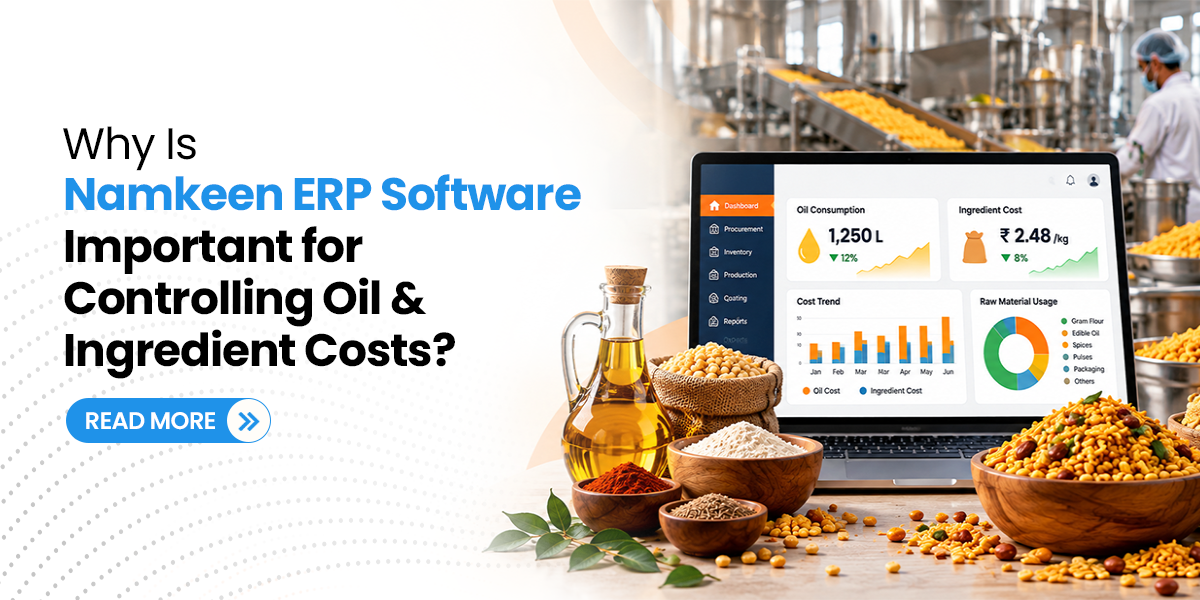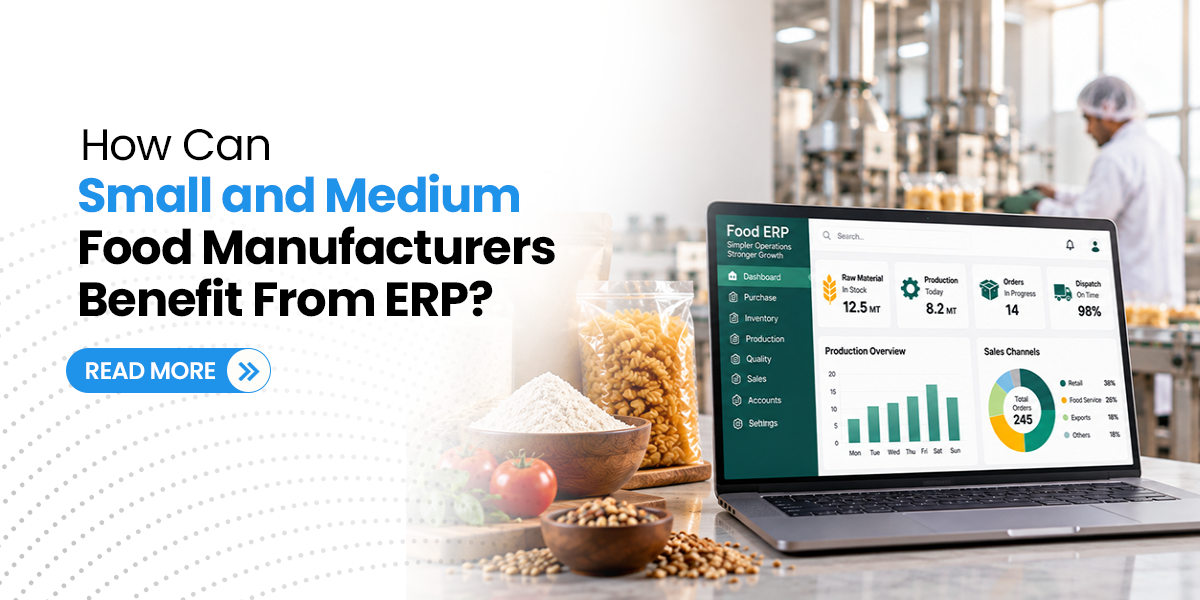

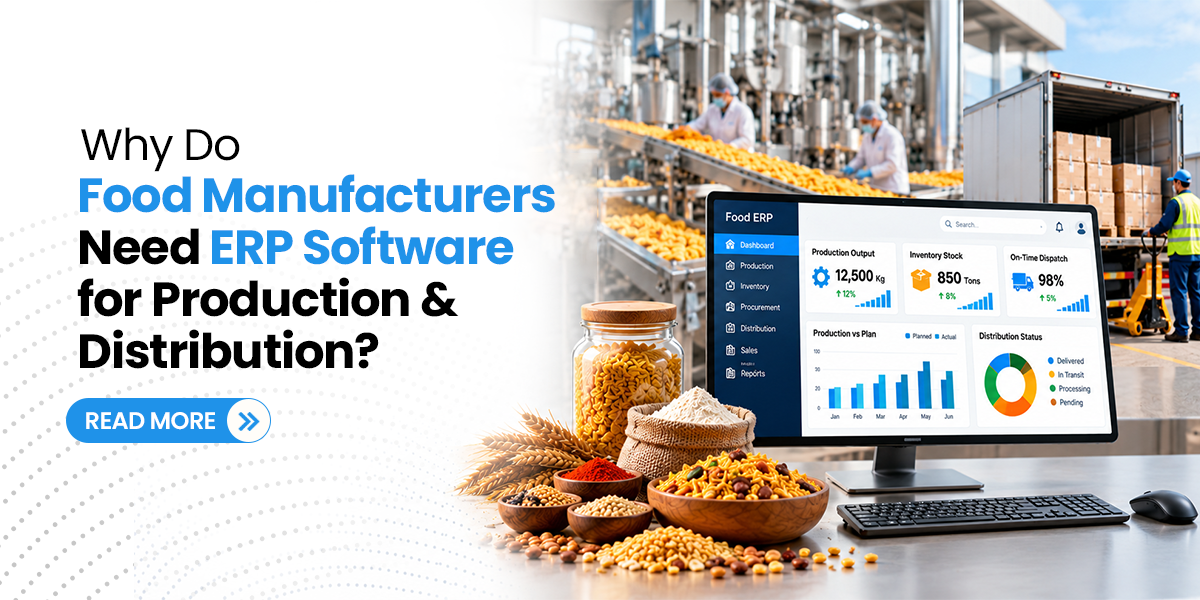

The food manufacturing process involves multiple tasks which are interdependent, like the procurement of raw material, production management, storage of the product, and distribution of the orders. Manually working with these processes can be challenging to keep track of records and operations. ERP for food and beverages brings all of these vital functions together into one system, providing food manufacturers with greater visibility and control over production, inventory, procurement, sales, and distribution processes.
What are the ways in which ERP software improves food production?
Care needs to be taken when planning food production; the quantities and composition of ingredients, batches, and production times need to be synchronised. These activities are then linked by the ERP software for food and beverages industry, enabling manufacturers to plan their production relying on the materials and requirements they have.
- Centralized production planning
- This enables you to keep track of recipes and batches.
- Recipe/batch management
- Ingredient availability tracking
- Production schedule visibility
Since production records are connected, then manufacturers are able to compare how much material has been used in different batches of production to how much was expected and how much was planned vs. how much was used. This can help you to plan your resources more effectively and avoid any unnecessary delays in production.
Is ERP Software a solution to improve inventory management?
In the food manufacturing sector, the management of inventory is especially crucial as the ingredients and food products can have particular storage requirements and have different shelf lives. F&B ERP software has the ability to offer a unified perspective of stock flow throughout the buying and selling, manufacturing, and storage processes.
- Real-time stock visibility
- Batch-wise inventory records
- Expiry monitoring
- Stock movement tracking
Having inventory data allows manufacturers to know what’s in stock, what’s taken out of stock or used up, and what needs to be added back. This can reduce the over-purchasing and the proper inventory for future production.
How does ERP aid the food distribution?
Distribution is the coordination of finished goods, customer orders, warehouses, and delivery. An ERP system can also integrate sales and distribution with inventory and production, making the order management process smoother.
Production and distribution can be linked with manufacturers being able to view connected information on the levels of stock available, pending orders, and dispatch needs. This can help enhance communication between teams and minimize the errors and delays associated with misinformation or outdated information.
What are the characteristics of food manufacturers they should seek?
Food manufacturers must select ERP software that would be suitable for their manufacturing process and integrate essential business activities.
- Production management
- Inventory control
- Purchase management
- Sales order management
- Warehouse coordination
- Distribution tracking
Batch tracking, recipe management, inventory visibility, and production planning are additional features that can be beneficial for companies with multiple products and ingredients. Interdepartmental integration can also help eliminate repetitive data entry and disjointed processes.
Conclusion
ERP software can ensure that food manufacturers are able to integrate their production and distribution processes and have a better grasp of their ingredients, stock, batches, orders, and finished goods. It has the added advantage of having all of these operations under one roof, enabling better coordination and simplifying the day-to-day manufacturing processes. Global Infocloud is an ERP Software provider for food manufacturers that want to have connected business processes and enable them to support production, inventory, sales, and distribution processes in one system.