

A bakery inventory management system can help prevent waste of ingredients and stock shortages in a variety of ways.A bakery inventory management system can minimize the waste of ingredients and stock shortages in several ways.
One of the greatest difficulties in bakery work is to inventory. Ingredients like flour, sugar, butter, yeast, cream, flavours and fruits must be in place at the start of production if not already in place and if too much is stocked, it will create unnecessary waste and may lead to ingredients going bad before they are used.
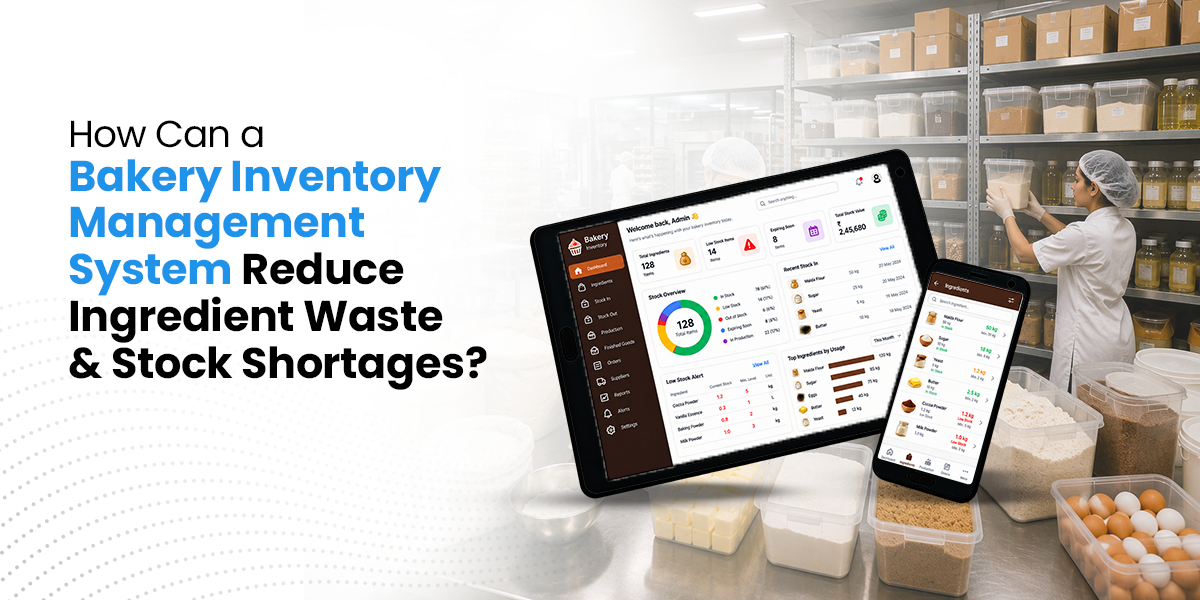
A Bakery Inventory Management System is designed to ensure that businesses have the appropriate level of inventory and usage. The system can help minimize waste in ingredients and stock shortages due to the increased visibility of stock and material use, purchasing, expiry dates, and production requirements.
1. Allows for Real-Time Inventory Visibility
With constant purchases and use of ingredients, manual inventory records can easily become out-of-date.
An Inventory Management System gives an all-in-one perspective of the stock on hand. Bakery managers can view current inventory, receiving materials, issuing ingredients and remaining inventory without having to rely on several spreadsheets.
This will make it easier to determine which ingredients are in stock, and which are in need of replenishment.
2. Avoids Unusual Stocking Outages
Being short of an important ingredient during the production can postpone orders and upset the whole production schedule.
A system to keep track of minimum and reorder levels in the bakery inventory can be created. As stocks get close to the set target, the purchasing teams are able to spot the need and make the necessary purchase before it’s too late.
It works well for all of the ingredients that are used regularly in the kitchen such as flour, sugar, yeast and food packaging.
3. Minimises ingredient expiry and spoilage
Foods that need to be used quickly must be well-managed for stock rotation. Having too much stock on hand can result in greater potential for materials to expire before they’re used.
An appropriate system can be in place to track information on batches, expiry dates and stock movements. This enables bakery staff to determine what materials are in the process of becoming ‘expiring’ and prioritise their use.
There are other inventory practices that can enhance stock rotation like FIFO (Fist In, First Out) and FEFO (First Expired, First Out).
4. Linkages between Inventory and Production Planning
Linking inventories with production planning makes it easier to manage inventory.
In a bakery, for instance, if the bakery wants to bake some amount of bread or cakes, the system can be used to calculate the necessary ingredients according to the recipes and production needs.
This enables companies to discover the amount of materials they have or if they have to order more for production.
5. Reduces amounts of materials used in recipes
The ingredients and the quantity used depends on the type of bakery items.
A bakery ERP system can store product recipes or Bills of Materials (BOMs) which can assist enterprises to achieve an estimate of materials and keep track of precise use.
This will decrease the amount of ingredients being used and can help determine if there are any differences between what you planned to eat and what you actually ate.
6. Helps Control Over-Purchasing
It is possible to over purchase ingredients as this will lead to extra costs of holding inventory and can lead to extra wastage particularly when the items purchased have short shelf lives.
An inventory management system can complement current stocks, past consumption, production plans, and purchase needs, all of which help in making better purchases.
This aids bakeries to keep their stocks healthier without affecting their production needs.
7. Takes account of Wastage and Material Losses
Not all the losses of ingredients are due to expiry. The other causes of wastage include the use of incorrect measurement, damaged materials, production errors and handling problems.
A system could be set up to track material losses and to compare material usage to the planned material usage. Managers are then able to spot the losses and make corrective action accordingly.
8. Improves Multi-Location Inventory Management
If you have more than one bakery, warehouse or production site, it can be difficult to keep track of inventory at each location.
A single ERP system can offer increased visibility on stock between the locations. This can assist companies determine whether they have an excess of inventories at one facility and a lack of inventories at yet another, to enhance inventories use.
9. Assists with Better Inventory Reporting
A report of this kind will assist the bakery owner in knowing how his/her inventory is being utilized.
Reports that are useful:
- Current stock levels
- Ingredient consumption
- Expiring materials
- Purchase history
- Wastage reports
- Batch-wise inventory
- Reorder requirements
- Inventory valuation
These insights guide managers in their purchasing and production decisions and lead to quicker decisions and better informed ones.
Conclusion
A Bakery Inventory Management System can also aid the business in keeping the proper ingredients on hand at the appropriate time and avoid excess stock and waste. The interconnection of inventory and production planning, recipes, purchasing, batch tracking, expiration management and reporting enables bakeries to have more control over their material flow.
Global Infocloud’s ERP software for bakery offers features that include inventory management, purchasing, production planning, demand forecasting, batch traceability, shelf-life management and waste optimization for the growth of bakery businesses.
By having a better view of inventories and more data-based planning, bakeries can save their ingredients, prevent production delays and disruptions, manage inventories, and have a smoother daily operation.